IPTV vs Streaming: Key Differences and How to Choose the Right Option
- Nov 08, 2026 12:11 am
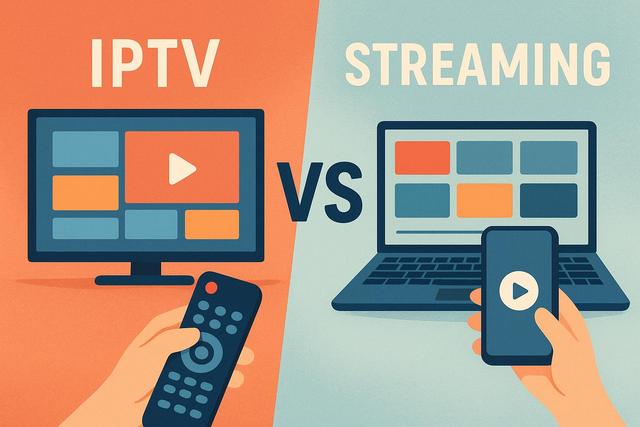
Understanding IPTV and Streaming
Both IPTV and streaming utilize the Internet to deliver video content. However, they refer to different services and ways of watching television. Understanding the difference between IPTV and streaming can help you choose the right service, verify its legality, and avoid risky subscriptions.
Learn More
To find further information and options, visit our download page.
IPTV vs Streaming: The Essential Difference
The difference between IPTV and streaming primarily lies in the type of service offered. Streaming is a broad term. It describes the playback of audio or video content directly over the Internet, without needing to fully download the file before watching it. A video-on-demand platform, a live broadcast on a news site, or music streamed online all use streaming.
IPTV stands for Internet Protocol Television, which refers to the delivery of television channels and programs over an Internet connection. IPTV can offer live broadcasts, replay options, a program guide, and sometimes video-on-demand.
In other words, IPTV relies on streaming, but not all streaming services are necessarily IPTV offerings. A series watched on an SVOD platform pertains to streaming. A bouquet of TV channels delivered via an Internet box or an operator's app typically qualifies as IPTV.
How Does Video Streaming Work?
With streaming, your device receives content in small data chunks. The player starts playback as soon as it has loaded a sufficient amount of data, so you don't have to wait for a full download to finish.
This mode of delivery often adapts to the quality of your connection. If the bandwidth decreases, the platform can reduce the resolution of the image. This way, you avoid interruptions, even though the quality may become less clear for a brief moment.
Streaming encompasses a wide range of uses, including movies, series, short videos, concerts, podcasts, live games, and video conferences. It works on a web browser, a mobile app, a smart TV, a console, or a media box.
The Two Main Forms of Streaming
Streaming typically appears in two forms:
- On-Demand Streaming: You choose a program from a catalog and start it whenever you like. Movies, series, and replay videos fall into this category.
- Live Streaming: The program occurs simultaneously for all viewers. A live show, a sports event, or a news channel may function this way.
Both of these uses can also exist within an IPTV offering, which is why the terms often overlap in everyday conversations.
How Does IPTV Work?
IPTV transmits television programs over an Internet network. Your provider may use its own box, a dedicated app, or a compatible decoder. Depending on the service, you can access live channels, an electronic program guide, replay content, and recording options.
Within a standard Internet package, the operator often controls a significant portion of the network and hardware, allowing for optimized delivery to your decoder. This setup aims to provide a stable experience for live channels.
However, the term IPTV alone does not guarantee the quality or legality of a service. Official offerings utilize this technology, particularly those from authorized operators and broadcasters. Conversely, some sellers also use the term IPTV to promote subscriptions granting access to numerous channels without having the necessary rights.
Comparison Table: IPTV vs Streaming
| Criteria | IPTV | Streaming |
|---|---|---|
| Definition | Transmission of television over the Internet | Playback of online content without complete downloading |
| Main Content | Live channels, replay, TV guide, sometimes VOD | Videos, movies, series, music, live broadcasts, podcasts, and more |
| Typical Usage | Replacing or complementing traditional television | Watching or listening to selected content on multiple devices |
| Equipment | Box, decoder, app, or smart TV | Browser, app, mobile, connected TV, or console |
| Viewing Mode | Often centered around channels and programming | Often focused on on-demand catalog, but also live |
| Legality | Depends on the rights held by the provider | Also depends on rights and service terms |
IPTV and Streaming: What Are the Usage Differences?
IPTV is suitable for those who wish to recreate the habits of traditional television. You can browse channels, check the evening's programming, and follow a live event. It may also be practical in a household where multiple people are watching different content.
On-demand streaming corresponds more to a logic of freedom. You choose a movie or series at a time that suits you. You can often resume playback on another device. This flexibility explains its success among those who rarely watch live channels.
In practice, it is common to use both. An Internet television offering allows you to follow current events or live shows. A streaming platform then complements the offering with freely chosen series, documentaries, or films.
Image Quality, Bandwidth, and Connection Stability
Quality depends not only on the words IPTV or streaming. It primarily relies on your connection, your home network, your device, and the quality provided by the provider. An unstable connection can lead to interruptions, loading delays, or less sharp images.
Live content requires special attention. For an IPTV channel or a streaming event, you can't always buffer the content for as long as a video on demand. A poorly covered Wi-Fi network can lead to more issues.
To enhance the experience, place your router in an open area. If possible, connect the decoder or TV to the router with an Ethernet cable. Also, ensure that other devices are not downloading large files during viewing. This way, you reduce the risks of slowdowns.
Before choosing an offering, test your connection during the hours when your household uses the Internet the most. A good theoretical speed isn’t always sufficient; stability is equally important, especially for watching live programs.
Legal vs Illegal IPTV: Important Considerations
IPTV is a legal technology. Its usage becomes problematic when a service broadcasts channels, movies, or events without authorization from rights holders. Therefore, one should not confuse IPTV with piracy.
A legal offering clearly states its publisher's identity, subscription conditions, and offered content. It is generally available through a recognized operator, an official broadcaster, or a known platform. Applications are also often found on official stores.
Conversely, be cautious of an offering that promises an immense number of premium channels, paid events, or recent catalogs for a very low price. The absence of legal notices, payment only in cryptocurrency, or links sent via messaging are also warning signals. While these elements alone do not prove fraud, they should prompt you to verify the service.
Do not install unknown applications that request excessive permissions. Also, avoid providing your banking information on an untrustworthy site. An illegal subscription can stop working without notice and may expose your devices to malware or data theft.
How to Choose Between IPTV and Streaming?
The right choice depends on your habits, budget, and the programs you truly watch. Start by identifying your priorities. If you watch live channels every day, a legal IPTV offering may better meet your needs. If you prefer watching series at your own pace, an on-demand streaming platform may suffice.
Ask yourself the following questions before subscribing:
- Do you often watch live television or mostly on-demand programs?
- Which channels, shows, movies, or events are essential for you?
- How many screens does your household use simultaneously?
- Is your TV, box, or mobile compatible with the service?
- Are the broadcast rights, prices, commitment duration, and cancellation terms clear?
Also, compare useful options. Replay, live control, user profiles, subtitles, audio description, and offline downloading can make a real difference. Don't choose a subscription solely for the quantity of content; select one that you will actually use.
Finally, check the catalogs and conditions at the time of subscription. Available channels, sports rights, prices, and options may change. This information depends on commercial news and should therefore be verified directly with the provider.
Can You Watch IPTV Without a Box?
Yes, in some cases. Many Internet television offerings provide an app for smart TVs, smartphones, tablets, computers, or media boxes. You can then watch channels without installing a dedicated decoder.
However, a box or decoder can simplify usage. It often combines channels, the TV guide, and settings into an interface designed for the living room. It may also offer a remote control and recording functions, depending on the service.
Before giving up the box, check the compatibility of your TV. Some older models do not support recent applications. Also, check the number of screens allowed simultaneously; this limit varies by service.
FAQ About the Difference Between IPTV and Streaming
Is IPTV Streaming?
Yes, IPTV uses streaming to transmit programs over the Internet. However, it primarily focuses on television, live channels, and associated services like replay or TV guides.
What is the Difference Between IPTV and Netflix?
Netflix is an on-demand streaming service. It allows you to choose movies, series, and documentaries from a catalog. An IPTV offering, on the other hand, aims more at broadcasting television channels over the Internet, although it may also include on-demand content.
Do You Need a Very Fast Connection for IPTV?
A stable connection is primarily what you need. Image quality, the number of used screens, and your Wi-Fi network also influence the experience. An Ethernet connection can improve stability on a fixed TV or decoder.
How to Know if an IPTV Offering is Legal?
Check the identity of the provider, legal notices, sales conditions, and stated broadcasting rights. Be wary of unrealistic promises and abnormally low prices for many paid contents.
Conclusion
Streaming refers to playing content over the Internet, while IPTV specifically denotes television broadcast via this network. IPTV can cater to fans of live channels, whereas on-demand streaming suits those who wish to choose their programs freely. In any case, prioritize a legal service that is compatible with your devices and tailored to your actual usage.


