Free Software Alternatives: Smart Choice or Risky Move?
- Jun 28, 2026 01:11 am
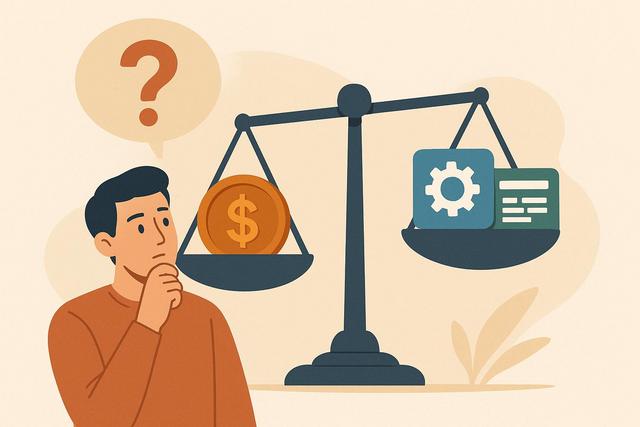
Are you wondering if a free alternative can replace paid software? This is a common question, whether it's for office applications, photo editing, management, or accounting. In this article, we will analyze the intent behind this inquiry and help you decide if free or open-source software truly offers a viable alternative to a paid solution.
For those interested, you can find the latest version of Microsoft Office available for free download here.
Understanding the Intent Behind the Search
When a user asks, "Is this a good alternative to paid software?", they are primarily seeking to compare options.
Their objective is clear:
- reduce costs;
- avoid a subscription;
- find a simpler solution;
- or test a tool before committing.
The main intent is thus comparative and decision-making. The reader wants to know if a free or cheaper alternative can truly replace a paid software without losing quality, security, or features.
To answer this, several concrete criteria must be analyzed.
Why Seek an Alternative to Paid Software?
More and more vendors offer their software in subscription form. This can pose issues.
Long-Term Costs
A monthly subscription may seem reasonable. However, over several years, it represents a significant budget. For an individual or a small business, the bill can add up quickly.
A free alternative allows you to limit fixed expenses.
Complexity of Features
Some paid software offers very advanced options. However, many users only utilize a small part of these features. Therefore, they pay for unnecessary functionalities.
In this case, a simpler solution may suffice.
Search for Freedom
Open-source software also attracts users for another reason: transparency. The code remains accessible. Users are less dependent on a single vendor. This reassures certain professionals.
Benefits of a Free or Open Source Alternative
An alternative to paid software presents several advantages.
Reduced or Zero Cost
The main advantage is the price. Free software eliminates the initial investment. You can install and test it without financial risk.
This suits well:
- students;
- associations;
- startups;
- small organizations.
Easier to Use
Some alternatives focus on the essentials. The interface is cleaner. Users can find what they need more quickly.
Thus, for common tasks like writing a document, editing a simple image, or managing basic invoices, an alternative may suffice.
Active Community
Open-source software often thrives thanks to a community. Users share tutorials, extensions, and patches.
However, support remains community-driven. You may need to seek answers on forums.
Limitations Not to Be Underestimated
A free alternative may not fit all uses.
Sometimes Limited Features
Paid software often includes advanced features. For example: extensive automation, professional integrations, detailed analytical tools.
An alternative may lack compatibility with certain formats or specific systems.
If you work as a team with partners who use the standard paid software, this could pose problems.
Technical Support
A paid software vendor generally offers:
- customer support;
- regular updates;
- guaranteed maintenance.
With a free alternative, support may be limited. You may sometimes have to solve issues on your own.
Security and Compliance
For professional use, security remains essential. Some paid software guarantees specific standards, especially regarding data protection.
Before opting for an alternative, check:
- update frequency;
- project reputation;
- reviews from professional users.
If regulations change, make sure the software adapts to these changes. This information should be checked regularly.
How to Know If It’s a Good Alternative for You?
The answer depends on your situation. There is no one-size-fits-all solution.
Analyze Your Real Needs
List the features you genuinely use. Be specific.
For instance:
- export to PDF;
- online collaboration;
- automatic backups;
- cloud synchronization.
Then, compare this with what the alternative offers.
If 80% of your needs are covered, that might be sufficient.
Test Before Deciding
Many free alternatives allow unlimited use. Take this opportunity to test it on a real project.
Work on it for several days. Check stability. Evaluate your comfort of use.
This testing phase is essential.
Consider Your Future Growth
Today, your needs may be simple. However, your activity may evolve.
If you foresee rapid growth, choose a scalable solution. Otherwise, you will have to migrate later, which takes time.
Comparison: Free Alternative vs Paid Software
Here is a summary table to better visualize the differences:
| Criteria | Free Alternative | Paid Software |
|---|---|---|
| Price | Free or low-cost | Subscription or license |
| Features | Essential to advanced depending on the project | Often complete and advanced |
| Support | Community-based | Dedicated customer support |
| Updates | Variable based on the team | Regular and structured |
| Security | Depends on the project | Frequent contractual commitments |
This table shows that no solution is perfect. Everything depends on the context.
When Is It a Good Alternative?
A free alternative to paid software is often a good choice if:
- you have a limited budget;
- you use few advanced features;
- you work alone;
- you are willing to seek help online.
It may also be suitable for occasional or secondary use.
For example, to occasionally modify documents or create simple visuals, a free tool is more than adequate.
When Is It Better to Choose Paid Software?
A paid software is more suitable if:
- your work directly depends on the tool;
- you need to ensure legal compliance;
- you work in a team with specific standards;
- you need prompt support.
In a demanding professional context, reliability often takes precedence over savings.
Free Alternative and Performance: Myth or Reality?
Many believe that free software is less efficient. This is not always true.
Some open-source projects compete in quality with paid solutions. Their development may sometimes be very active. However, others may stagnate or become obsolete.
Before choosing, check:
- the date of the last update;
- the frequency of updates;
- the activity of the community.
This gives you a good indicator of longevity.
Conclusion
So, is it a good alternative to paid software? The answer depends on your needs, budget, and level of demand.
A free alternative is perfect for simple, occasional, or personal uses. However, for strategic professional use, paid software often offers more guarantees in terms of support, security, and scalability.
The ideal approach is to analyze your real needs, test the tool, and anticipate your evolution. This way, you will make an informed decision suited to your situation.
FAQ
Is a Free Alternative Legal?
Yes, as long as you comply with the software license. Open-source and free software are legal. However, check the terms of use, especially in a professional context.
Can a Free Alternative Be Used in Business?
Yes, but you must verify compliance, security, and obligations related to your sector. Some regulated professions require specific tools.
Is Free Software Secure?
They can be, but it depends on the project. Check the frequency of updates and the reputation of the solution before adopting it.
Can You Easily Switch from Free Software to Paid Software?
This depends on the compatibility of formats and data. Before choosing, ensure your files can be exported without significant loss.


